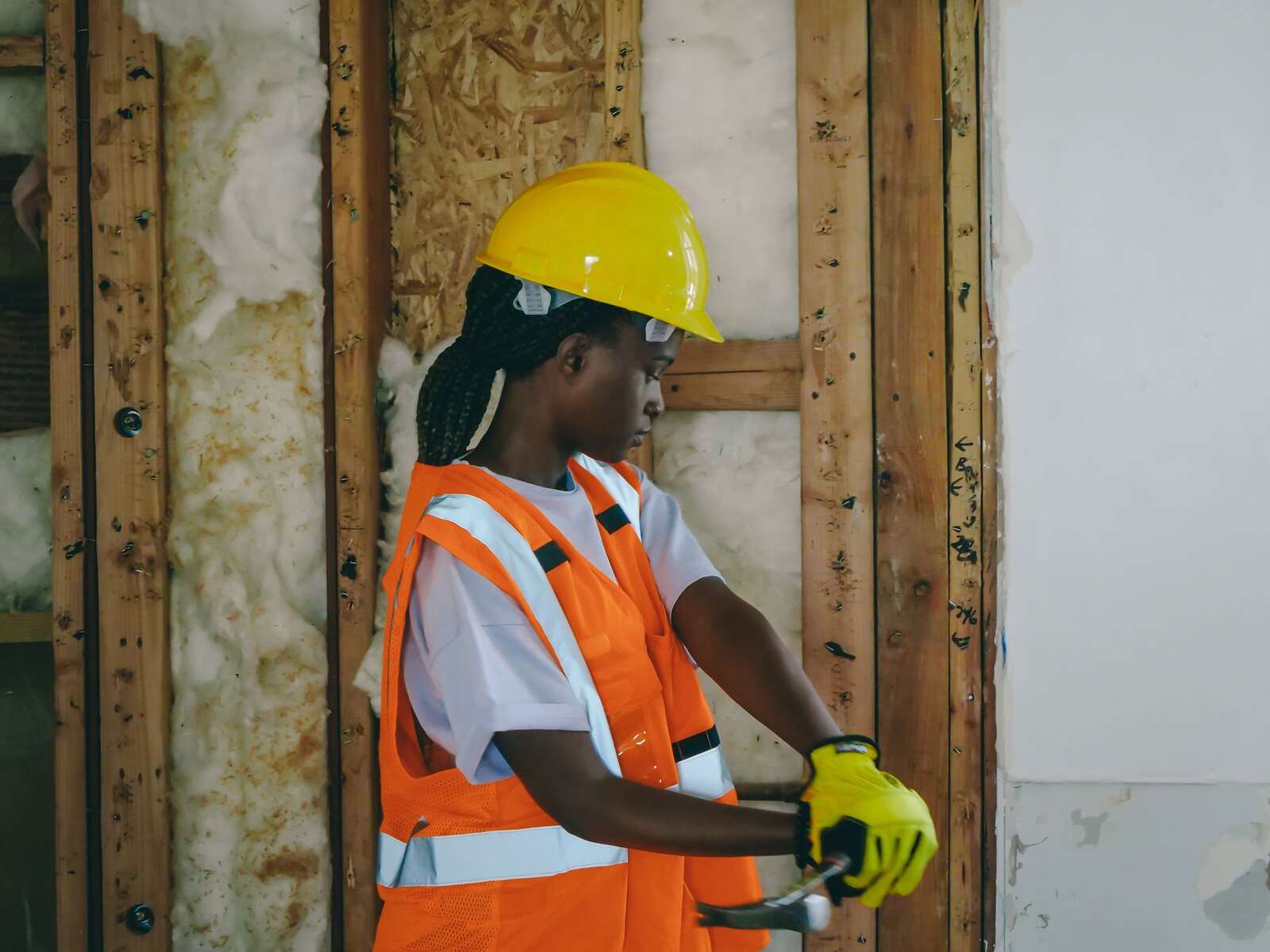
Attic Insulation Replacement in San Diego, CA
Insulation that roof rats have nested in, tunneled through and soaked with urine comes out and new insulation goes in, after the attic is sealed and cleaned. The installation is routed to a contractor holding the CSLB license for it.
- Sealed and cleaned before new fill
- CSLB-licensed installation
- Free attic inspection first
What attic insulation replacement in San Diego includes
Attic insulation replacement is the removal of insulation that rats have ruined and the installation of new insulation to the depth the attic should have had, and in San Diego it is two jobs under two licenses. The pest side, trapping and sealing, is Branch 2 work under the Structural Pest Control Board. The insulation side, done as a contracted repair, is contractor work under the Contractors State License Board, and it is routed to a contractor holding the B or C-2 license for it.
The sequence is the same on every job we route. The roof rats are trapped out, the roofline is closed, the attic is cleaned and sanitized, and then the insulation contractor comes in. Skipping to the last step is how people pay twice. The cleaning is on the attic cleanup page and the sealing on the rodent exclusion page.
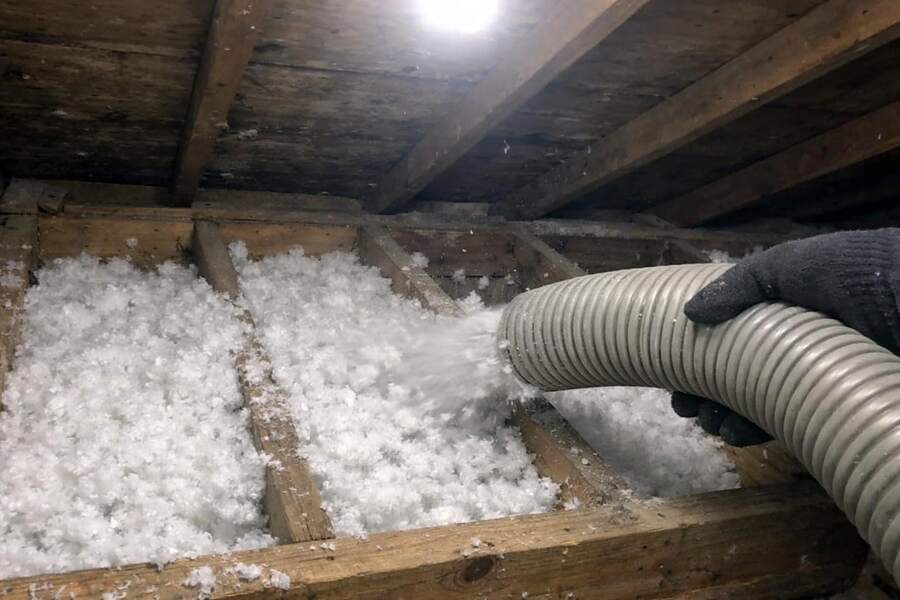
- Removal of soiled, compressed and nested-in insulation, by hand for batts and by insulation vacuum for blown-in material, bagged and carried out sealed
- Cleanup and sanitizing of the exposed joists and drywall before anything new goes in
- Air sealing of the top plates, can lights and penetrations that the old insulation was hiding, where the contractor finds them open
- Installation of new blown-in or batt insulation to the depth specified on the quote
- Baffles at the eaves so the new fill does not block the soffit ventilation
- A written record of what came out, what went in and the depth installed
For many homeowners this is the last visit in a stretch that started with scratching over the bedroom and weeks of poor sleep, and the new insulation is the point at which the attic stops being the room they think about at night.
Signs the insulation has to be replaced
Insulation has to come out when it is soiled with droppings and urine, compressed into runways, or shredded into nests, and any one of the three usually means the rats were in the attic for a season or more. From the hatch the signs are visible with a flashlight before anyone climbs in.
- Runways: flattened paths through blown-in fill along the eaves and between the hatch and the ducting
- Tunnels: holes in the surface of blown-in material where rats have gone under it
- Nests: wads of shredded insulation, paper and palm fiber in the corners of joist bays
- Staining: dark patches where urine has soaked through to the paper face of batts or the drywall below
- Droppings on and in the fill, a quarter to half an inch long with pointed ends on a roof rat job, per UF/IFAS
- Odor: an ammonia smell through the ceiling can lights on warm afternoons
- Uneven depth: fill scraped bare in some bays and heaped in others
Insulation that shows one small area of disturbance near the hatch can often be spot-cleaned and topped up. Insulation that shows runways along a whole eave line, or nests in more than one bay, is past that point. The free rodent inspection reads which case the attic is.
Why contaminated insulation stops doing its job
Insulation works by holding still air in loft, and rats destroy the loft. The US Department of Energy states that compressed insulation does not deliver its rated R-value, and that insulation which has gotten wet performs poorly. A rat runway is compression along a line, a nest is compression in a heap, and urine is wetting that never dries out cleanly.
The effect in a San Diego attic shows up on the electric bill in September, when the attic is the hottest part of the house and the air conditioning is working against a ceiling with flattened paths through it. It also shows up as smell, because the fill holds the urine and releases the ammonia on warm days, and no amount of fogging over the top reaches what is inside the material.
The DOE guidance describes the mechanism, and the mechanism is enough to decide the job. The practical rule the contractors we route use is that fill which is flattened, wet or nested in is replaced, and fill that is clean and at depth stays.
Who is licensed to replace attic insulation in California?
Insulation replacement done as a contracted repair is contractor work under the Contractors State License Board, and the pest company that trapped and sealed the attic is licensed for a different thing. Rodent control in California is Branch 2 of the Structural Pest Control Board, which covers household pests and the trapping, sealing and cleanup that go with them. Tearing out and installing building insulation as a paid job falls under a CSLB license, a B general building license or a C-2 insulation and acoustical license.
On the jobs we route, that split is handled in the open. The trapping, sealing and cleanup go to a company holding the Branch 2 registration the work requires, and the insulation installation is routed to a contractor holding the CSLB license for it. Some companies hold both, and a homeowner can check either number: the PR number at pestboard.ca.gov and the contractor license at cslb.ca.gov.
The reason to care is the same reason to care about any license. A CSLB license carries a bond and workers compensation requirements, and a homeowner paying a pest company to install insulation without one has no recourse if the fill is short, the baffles are missing or someone is hurt in the attic.
Does all the insulation have to come out, or can it be topped up?
Partial replacement is the right call when the damage is confined to one or two areas, and full removal is the right call when blown-in fill has been tunneled through across the attic, because contamination in loose fill spreads with the material and cannot be vacuumed out of it. Homeowners in forum threads ask this question hoping for the cheaper answer, and sometimes it is the honest one.
| What the inspection finds | What gets done |
|---|---|
| A short run of droppings near the hatch, fill otherwise at depth | Spot removal, sanitize, top up the bays that were disturbed |
| Runways along one eave line in batts | Pull and replace the affected batts, sanitize the bays, leave the rest |
| Runways and tunnels through blown-in fill across several bays | Full removal by insulation vacuum, clean and sanitize, new fill to depth |
| Nests in more than one bay, staining on the drywall below | Full removal, sanitize, odor sealer on stained surfaces, new fill |
| Old fill under depth with no contamination | No pest work needed; a straight insulation top-up by a CSLB contractor |
The contractor who removes the fill lists what came out and what stayed, so the homeowner can see the decision and a second bidder can price the same scope.
Blown-in cellulose, blown-in fiberglass and batts compared
The three materials used to refill a San Diego attic are blown-in cellulose, blown-in fiberglass and fiberglass batts, and the choice is about the attic more than the rats, because none of them keeps a rat out. Sealing does that. What the material decides is how the attic performs and how easy the next inspection is.
| Material | Where it fits | What to know after a rat job |
|---|---|---|
| Blown-in cellulose | Irregular attics with lots of framing and ducting; fills around obstructions | Dense and settles evenly; holds odor if rats return, so the roofline must be closed first |
| Blown-in fiberglass | Same attics; lighter and does not settle as much | Easy to tunnel through if the attic is reopened; easy to vacuum out again |
| Fiberglass batts | Simple attics with open, regular joist bays and no ducting in the way | Easy to lift and inspect under; rats nest under and between batts if they get in |
| Spray foam at the roof deck | A different design that seals the attic into the conditioned space | A larger job with its own permitting; the contractor advises whether the roof and ventilation suit it |
Whichever material goes in, the eave baffles matter. New fill blown against the soffit vents blocks the airflow that keeps the attic and the roof deck cool, and a contractor who skips the baffles has traded one problem for another.
What attic insulation replacement costs in San Diego
Insulation removal and replacement runs $2.50 to $5.50 per square foot as a national band in HomeGuide's 2026 figures, and the free inspection produces the itemized number for a specific attic. No San Diego cost survey exists to cite, so every figure below is national and labeled that way.
| Line item | National band (HomeGuide 2026) |
|---|---|
| Insulation removal and replacement | $2.50 to $5.50 per sq ft of attic floor |
| Attic cleanup and decontamination beforehand | $600 to $2,500; severe attics to about $4,000 |
| Full-home exclusion beforehand | $500 to $2,500 |
| Full-scope restoration (cleanup, insulation, repairs) | $3,000 to $10,000 and up |
| Standalone inspection | $0 to $175; free here |
What moves the per-square-foot figure is the material, the depth installed and the access. Blown-in fiberglass to a modest depth in an open truss attic sits at the bottom. Dense cellulose to a full depth, in a low hip-roof attic with ducting to work around and a crawl space to insulate underneath as well, sits at the top. Removal of blown-in fill by vacuum costs more than lifting batts. Ask whether the quote is per square foot of attic floor or of house, whether baffles and air sealing are included, and whether the removal and the cleanup are on the pest company's invoice or the insulation contractor's.
Insulation replacement on San Diego housing
The insulation a San Diego contractor finds when the hatch opens depends on the decade the house was built, and so does how much of it there is to replace.
Pre-war houses with crawl spaces
Craftsman and Spanish Colonial Revival houses in Mission Hills, Kensington, Talmadge, North Park and their neighbors often have thin or no attic insulation and, under the floor, batts hung between the joists over a crawl space. Roof rats coming in at a foundation vent nest in those batts. The replacement here is often two jobs, the attic and the crawl space, and the national guides price crawl-space insulation as its own line, which applies to this stock in a way it does to little of Florida or Texas.
Ranch houses of the 1940s to 1960s
Clairemont, Serra Mesa, Allied Gardens, Del Cerro and Bay Park have low attics with old batts or a shallow layer of blown-in, open eaves and canyon lots. The attics are hot, cramped and full of ducting, which is why access moves the price. The Clairemont page covers that stock.
Stucco and tile from the 1970s to 1990s
Tierrasanta, Mira Mesa, Rancho Penasquitos, Scripps Ranch and Rancho Bernardo have deeper attics with blown-in fill that roof rats tunnel through from a missing bird stop at the eave. This is the stock where full removal is most common, because loose fill carries the contamination wherever the rats went. The metal bird stop under the first course of concrete tile is the closure that keeps the new fill clean.
The law behind the sequence
California's AB 1788 took the second-generation anticoagulant baits out of residential use in 2021 and AB 1322 added diphacinone in 2024, so a San Diego attic is cleared by trapping. That is good news for the insulation job: there is rarely a poisoned carcass in the fill, and the attic can be certified quiet by traps before the contractor commits new material to it. Late winter and spring, after the October to February indoor peak, is when most of these jobs land.
What to ask before booking insulation replacement
An insulation quote should name the CSLB license number of the installer, the material and depth going in, whether removal and cleanup are included, and whether the roofline has been sealed, and a quote missing any of those is a quote to set beside another one. Ask before the truck is booked.
- What is the installing contractor's CSLB license number, and does it check out at cslb.ca.gov?
- What is the pest company's PR number for the trapping and sealing, and does it check out at pestboard.ca.gov?
- Is the roofline sealed and the attic quiet before the new fill is scheduled?
- Is the price per square foot of attic floor, and what depth and material does it buy?
- Are removal, cleanup, sanitizing, air sealing and eave baffles on the quote as lines, or assumed?
- Does the exclusion warranty from the sealing contractor cover a return visit if rats get back into the new insulation?
Warranty terms belong to the contractor who sealed the house, and the insulation contractor will want the sealing confirmed before they fill an attic. The about page covers what the routed contractors are expected to put on a quote, and the contact page has the number and the form.
Services that usually go with this one
A San Diego rodent job is a sequence, and these pages cover the steps on either side of this one.
- Attic Cleanup and Decontamination: Droppings, nests and soiled insulation out, the attic sanitized, without the scare stories.
- Rodent Exclusion: Closing tile eaves, open Craftsman rooflines, crawl-space vents and utility gaps to the quarter-inch standard.
- Rodent Inspection: A free walk of the roofline, attic, crawl space and yard that decides the order of the job.
How the steps fit together is set out on the about page, and the phone line answers the rest at any hour.
What attic insulation is for
Why the R-value matters in the first place.
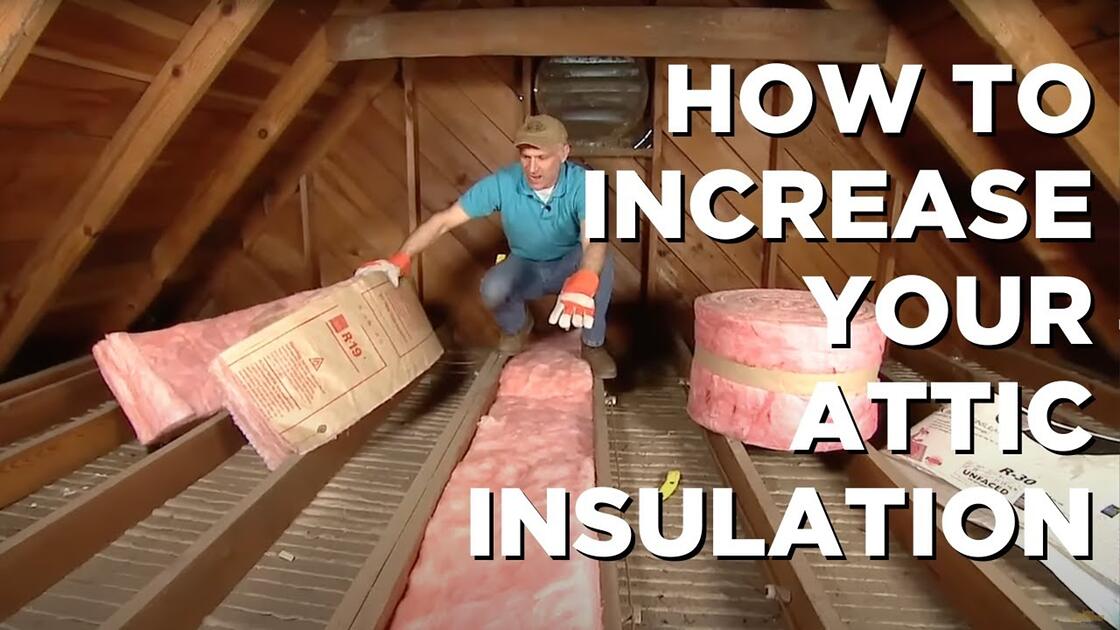
Video: The inexpensive way to up your home's insulation, from Today's Homeowner.
How an insulation replacement runs in San Diego
New insulation goes in last, after the rats are out, the roofline is closed and the attic is clean.
-
Inspection and two quotes
Whoever attends reads the attic for runways, nests and staining, walks the roofline for the openings in use, and the pest work and the insulation work are quoted as separate lines.
-
Trap and seal
Snap traps stay in until the attic is quiet, and the eaves, vents and penetrations are closed with hardware cloth, sheet metal and a metal bird stop on tile roofs.
-
Remove and sanitize
Soiled batts are lifted and blown-in fill is vacuumed out, bagged in the attic and carried out sealed, then the joists and drywall are cleaned and sanitized.
-
Install new insulation
A contractor holding the CSLB license for the work air seals the top plates, fits eave baffles and installs blown-in or batt insulation to the depth on the quote.
-
Written record
You receive a list of what came out, the material and depth installed, and the closures the pest company made, for the house papers and any future sale.
Why San Diego homeowners route insulation work through us
Two licenses, both named on the paperwork
Trapping and sealing in California is Branch 2 work under the Structural Pest Control Board, and insulation installed as a contracted repair is CSLB work under a B or C-2 license. The jobs we route keep those two apart on the quote: the pest company holds the Branch 2 registration and the installer holds the CSLB license, and a homeowner can check both numbers before anyone climbs into the attic. A quote that names one license for both halves of the job is the one to question.
California Structural Pest Control Board: rodent control is Branch 2; insulation repair is licensed by the Contractors State License Board
New fill only into a sealed attic
The insulation contractor we route will fill an attic once the pest company has confirmed the roofline is closed and the traps have gone quiet, because new insulation in an open attic is a bed for the next roof rats off the palm. On a tile roof that means the bird stop is in under the first course; on a pre-war house it means the foundation vents are screened as well. The order of visits is written on the quote, and the exclusion warranty the sealing contractor offers is what protects the new fill.
US Department of Energy: installing bird stopping is a recommended measure on clay and concrete tile roofs
Priced per square foot against a national band
HomeGuide's 2026 national figures put insulation removal and replacement at $2.50 to $5.50 per square foot, and the quote you receive states the square footage, the material, the depth and whether removal, cleanup and baffles are included, so the number can be set against that band and against another bid. There is no San Diego cost survey, so the figures are labeled national and the free inspection produces the number for your attic. Homeowners in forum threads describe bundled numbers they could never compare; the per-foot line is the fix.
HomeGuide 2026 national: insulation removal and replacement $2.50 to $5.50 per square foot
What Reddit Says About Attic Insulation Replacement in San Diego
Insulation replacement is the line item that turns a rat job into a big number, and homeowner threads in r/pestcontrol and r/HomeImprovement are full of people trying to work out whether the number was fair. The standard advice is to get several bids for the same scope, to have the insulation priced apart from the trapping, sealing and cleanup, and to ask whether the pest company does the insulation itself or brings in a contractor.
The red flags people warn each other about are a company selling new insulation before the roofline is sealed, a quote that never says how much fill is coming out or going in, and a bundled figure with a monthly monitoring plan folded into it. Real quotes in the threads for work described the same way run from under two thousand dollars to tens of thousands, and the recurring question is whether the homeowner is being taken advantage of. Sticker shock in the corpus is almost always about work the homeowner did not understand before it was quoted.
The questions they pass along are the ones to ask here. What exactly is included and what is a separate line? Is the whole attic being replaced or only the damaged bays? Who installs it, and are they licensed for that? Is the exclusion warrantied, and does it cover the new insulation if rats get back in? How many follow-up visits are included?
Under it is the same register as every rodent thread: weeks of broken sleep, a house that no longer feels like theirs, and friends telling them they are overreacting. The new insulation is usually the last visit, and people describe the relief of it.
The contractors we route quote the insulation as its own line with the license number of the installer on it, and schedule the fill after the sealing has been confirmed.
A typical insulation replacement call from a Scripps Ranch tile roof
The situation: A family in a 1980s two-story stucco house in Scripps Ranch, with a concrete S-tile roof and a queen palm leaning toward the garage eave, heard roof rats over the upstairs bedrooms through the winter. A pest company trapped four and screened two vents in March. In June the upstairs will not cool down, the electric bill has climbed, and a look through the hatch shows the blown-in fill tunneled along the whole rear eave and heaped into a nest beside the furnace.
What gets done: Whoever attends walks the rear eave and finds the bird stop under the first course of tile crushed flat for the length of the garage, which is the opening the vents job missed. The eave gets a manufactured metal bird stop and snap traps go in for a week to confirm the attic is quiet. The pest crew then vacuums out the tunneled fill, bags it in the attic, cleans and sanitizes the joists and puts an odor sealer on the stained drywall above the bedroom. A contractor holding the CSLB license for insulation air seals the top plates, fits eave baffles and blows in new fill to the depth on the quote.
How it turns out: The upstairs holds its temperature through the rest of the summer, the ammonia smell is gone, and the family has two documents for the house papers: the closure list naming the bird stop and the vents with the material used, and the insulation record naming the material, the depth and the license number of the installer.
Insulation replacement questions from San Diego homeowners
These questions come up on the phone line and in homeowner threads about replacing attic insulation after rats.
Can the pest company install the new insulation?
Only if it also holds a CSLB contractor license for the work. Trapping, sealing and cleanup are Branch 2 pest work under the Structural Pest Control Board, and installing building insulation as a contracted repair is contractor work under the Contractors State License Board, a B or C-2 license. Some San Diego companies hold both and can do the whole job; many hold one. On the jobs we route the installation goes to a contractor with the CSLB license, and the license number is on the quote so it can be checked at cslb.ca.gov.
How long does insulation replacement take?
Removal and installation on a typical San Diego attic take one to two days once the pest work is finished, with removal of blown-in fill the slower half. The pest work runs first and sets the calendar: HomeGuide's 2026 figures give trapping two to three days for a few animals and one to two months for a severe infestation, and the insulation contractor schedules after the traps have gone quiet and the sealing is confirmed. A crawl space that needs its batts replaced as well adds a day.
Does new insulation keep rats out?
No. Insulation is not a barrier and every material used in an attic can be tunneled through or nested in. What keeps rats out is the sealing: quarter-inch hardware cloth at the vents, sheet metal at chewed corners, a metal bird stop under the first course of tile and screened foundation vents on a raised house. The new fill stays clean because the roofline is closed, which is why the insulation contractor we route wants the sealing confirmed before the truck is scheduled. Tree and palm trimming off the roof helps the sealing last.
Is the insulation replacement covered by homeowners insurance?
Sometimes, and the policy language decides it. Many homeowners policies exclude damage from rodents and vermin, and some cover resulting damage such as a chewed wire or a burst pipe while excluding the insulation itself. The written record from the job, listing what came out, what the contamination was and what went in, is what an adjuster asks for. Ask the insurer before the work starts, and ask the contractor for photographs of the attic before removal. The quote itemizes the insulation apart from the pest work so a claim can reference the right line.
What should the quote say about depth and R-value?
It should state the material, the installed depth in inches and the R-value that depth is rated for, plus the square footage the price covers. The US Department of Energy notes that compressed insulation does not deliver its rated R-value, so the useful number is the depth the contractor installs and leaves undisturbed, with eave baffles so the fill is not pushed into the soffit vents. A quote that gives a price with no depth or material is one to send back for those two lines.
The free inspection says how much insulation stays and how much goes.

Book a free attic inspection in San Diego
Call (619) 853-5729 or send the form. Someone answers 24 hours a day, and the inspection that prices the removal and the new insulation is free.