
Rodent Removal in Escondido, CA
Escondido pairs a downtown grid laid out in 1886 with hillsides that were avocado and citrus groves within living memory, and both feed roof rats to the roofline. One call books a free inspection by a registered contractor.
- Free inspection, downtown or the hills
- Phone answered 24 hours a day
- SPCB Branch 2 registered contractors
Free Inspection in Escondido
The free inspection in Escondido starts wherever the house is oldest. On the downtown grid that means the crawl space and the foundation vents of a pre-war house before the roofline; on the hillside tracts it means the tile eave and the grove trees behind the fence. Whoever attends walks the eave from a ladder, checks every vent screen, reads the attic for droppings and rub marks, and crawls the foundation where the house has one. The written findings put trapping, sealing and cleanup on separate lines with a price beside each.
Escondido sits at the north end of the inland valley, about half an hour up Interstate 15 from downtown San Diego when the freeway is clear, and the contractors we route there work the North County side of the county. The phone is answered 24 hours a day. Book a free inspection and describe what you are hearing and which part of the house it comes from.
The old downtown grid sits on raised foundations
Escondido's town was laid out in 1886 in a valley whose name means hidden, and the blocks around the historic district still carry hundreds of designated houses from the decades that followed: Victorian cottages, Craftsman bungalows and Spanish revival houses on raised foundations with a crawl space underneath. That crawl space is the second way in. Foundation vents were screened with light mesh that has rusted, the sill line has shrunk away from the stem wall in places, and a plumbing line entering under the kitchen usually has a gap around it wider than the quarter inch the University of Florida extension gives as the rat-proofing standard.
The roofline on these houses is the other half. Open Craftsman rafters leave each bay open to the attic unless it was blocked, and the older tile roofs carry the same open first course as the newer ones. On a downtown Escondido house the closure list runs from the vents under the floor to the rafter tails above the porch, and rodent exclusion is priced for the whole of it. A house that old has usually had rats before, so the inspection also reads the insulation for the flattened runs that show an earlier population.

Grove hillsides and backyard citrus feed the roofline
Escondido grew as a shipping point for avocados, grapes and citrus, and the hillside tracts built since the 1970s sit on ground that was grove until the houses arrived, with remnant avocado and citrus trees left in the yards and on the slopes between them. Roof rats treat those trees as both food and road. UF/IFAS describes the species as arboreal, moving along branches, wires and palm trunks, and a hollowed orange or a chewed avocado under a tree is the yard-level sign most Escondido homeowners recognize after the fact.
The remedy is pruning and closing, in that order of cheapness. Limbs cut back off the roof and fallen fruit picked up remove the bridge and the food; the eave closed in metal removes the door. Neither works alone, because a roof rat ranges about 150 yards from its den and the next grove tree is inside that circle. Roof rat removal on a hillside Escondido lot is trapping in the attic while the pruning and the sealing happen around it.
The Witch Creek Fire rebuilt part of Escondido's edge
The Witch Creek Fire of October 2007 ran from Santa Ysabel through Ramona, Rancho Bernardo and Poway into Escondido's eastern and southern edges, burning close to two hundred thousand acres and more than a thousand homes across the county before it was stopped. Escondido houses that burned were rebuilt under newer code with ember-resistant vents; the houses beside them that survived kept the vent screens, tile courses and eave details they had before, some of them damaged during the defense and patched in a hurry.
The practical reading for a homeowner on that edge is that a surviving pre-2007 roofline deserves a close look at the vents and the eave course, and that the chaparral regrown up to the fence is the harborage a canyon would be anywhere else in the county. The rodent inspection records each opening with a photograph so the closure list can be checked against it later.
What We Handle in Escondido
The services Escondido calls for most are trapping and sealing on both the downtown and the hillside stock, with crawl-space work on the older houses that the rest of the county rarely needs.
- Roof rat removal: snap traps on the attic runs of a grove-hillside house, or in the crawl space of a downtown bungalow, left at least a week.
- Rodent exclusion: foundation vents and the sill line screened on the old grid, a metal bird stop along the tile eave on the tracts, rafter bays blocked on Craftsman rooflines.
- Rodent inspection: free, covering the roofline, the attic, the crawl space and the trees, with every opening photographed.
- Rodent clearance letters: a written report for an escrow on a designated historic house, where a buyer's inspector will ask about the crawl space.
- Attic cleanup: droppings and soiled insulation out of an attic that has carried rats through several grove seasons.
- Attic insulation replacement: new material after the flattened fill is removed, by a contractor with the CSLB license for it.
- Commercial rodent control: the restaurants and shops along Grand Avenue, where shared walls and a rear alley move rats between tenants.
A Typical Escondido Job
The situation: A couple in a 1920s Craftsman a few blocks from Grand Avenue hear scratching under the floor of the back bedroom at night and have found droppings in the pantry. The house has a crawl space they have never been in. A friend told them it was probably possums and to leave it.
What gets done: Whoever attends crawls the foundation and finds two vent screens rusted through, a two-inch gap around the kitchen drain line where it enters under the floor, and roof rat droppings, a quarter to half an inch long with pointed ends, along the top of the stem wall. Snap traps go into the crawl space and behind the pantry that afternoon. The vents get quarter-inch galvanized hardware cloth screwed to the framing, the drain gap gets a metal collar packed with mortar, and the open rafter bays over the porch are blocked once the traps have been quiet a week.
How it turns out: Three rats trapped under the floor in the first week, none after the sealing. The closure list names both vents, the drain line and the porch rafters with the material at each, and the couple keeps it with the house papers for the day they sell.
What This Costs in Escondido
An Escondido rodent job runs inside the published national bands, and the crawl space on a downtown house is the line item that the national guides price and that a slab-built San Diego suburb never needs.
| Work | National band (HomeGuide 2026) |
|---|---|
| Inspection | Free here; standalone elsewhere $0 to $175 |
| Trapping and removal | $250 to $1,200 |
| Full-home exclusion, including crawl-space vents | $500 to $2,500 |
| Attic or crawl-space cleanup and decontamination | $600 to $2,500 |
| Insulation removal and replacement | $2.50 to $5.50 per square foot |
| Dead rodent removal | $150 to $500 |
A hillside tract house with one open tile eave sits low in the exclusion band; a downtown bungalow with six foundation vents, an open sill and Craftsman rafters climbs toward the top because there are more openings to close. Every figure here is national, because no Escondido or San Diego cost survey exists, and every one is confirmed at the free inspection. Ask for trapping, sealing and cleanup as separate lines, and ask what the sealing warranty covers and for how long.
Rodents in the attic
What is happening above the ceiling, explained.
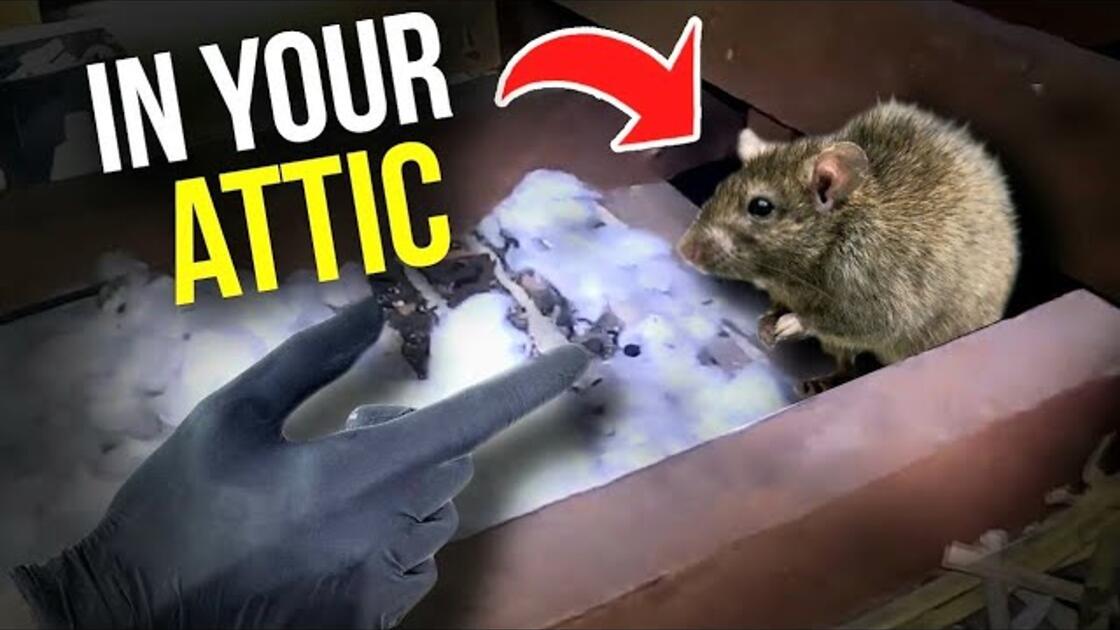
Video: Rodents in your ATTIC!? Here's what you do, from Twin Home Experts.
Common Questions in Escondido
What callers from Escondido ask before they book.
How long does it take to get rid of rats in an old Escondido house?
Usually two to four weeks, with the crawl space adding time on the downtown stock. National guides give two to three days to trap a handful of animals and one to two months for a severe infestation, and the traps stay in at least a week either way because roof rats are wary of new objects. A house with both a crawl space and an open roofline has two sets of runs to trap and two sets of openings to close, so the sealing visit is longer than the trapping.
What is the cheapest way to get rid of rats?
Snap traps plus sealing, done once. HomeGuide's national bands put trapping and removal at $250 to $1,200 and full-home exclusion at $500 to $2,500, and a job that includes both ends. The bait-only route looks cheaper until the animal dies in the crawl space of a 1920s house with no easy access, at which point the dead rodent removal line and a return visit are added to the bill.
Are the avocado trees on my slope the problem?
They are the food and the road, and the open eave or vent is the door. Roof rats move along branches and can range about 150 yards from where they nest per UF/IFAS, so a grove remnant two lots over is inside the radius. Picking up fallen fruit and pruning limbs back off the roof cuts the traffic, and the sealing is what makes the house closed whatever grows around it. Nobody has to take out a tree to end a rat problem.
Who is licensed to do this work in Escondido?
Anyone doing rodent control for hire in California has to work for a company registered with the Structural Pest Control Board for Branch 2, and every contractor we route into Escondido does. Ask for the company's PR number and check it at pestboard.ca.gov before work begins. If the job includes replacing insulation, that part goes to a contractor with the Contractors State License Board license for it, and cslb.ca.gov confirms that number the same way.
Downtown or the hills, the Escondido inspection is free.
Nearby Areas We Serve
The same contractors cover the cities around Escondido, and the service area is the whole of San Diego County.

Book a Free Inspection in Escondido
A free inspection on an Escondido house finds the openings above and below the floor, says what each takes to close, and prices every line before anyone starts. The phone is answered 24 hours a day.