
Rodent Removal in National City, CA
National City is the second oldest city in the county, and its houses have had more than a century to open up at the foundation and the eave. A free inspection by a registered contractor finds the openings and prices each one.
- Free foundation, eave and attic inspection
- Trapping and metal sealing
- Branch 2 registered contractors routed
Free Inspection in National City
The free National City inspection walks the foundation line first, then the roofline, then the attic, because the housing here is old enough that the crawl space is as likely an entry as the roof. Whoever attends checks the foundation vents and the sill, the porch skirting, the open rafter tails and gable vents, and the palms and vines against the walls, then reads the attic and the crawl space for droppings and worn runs. The report that follows puts trapping, sealing and any cleanup on separate lines with a price beside each.
National City is about five miles south of downtown San Diego on Interstate 5, so the drive from the office is short and the South Bay contractors we route are closer still. The phone is answered 24 hours a day. Book a free inspection and say whether the noise is under the floor or over the ceiling.
Victorian and early 1900s houses on raised foundations
National City was founded by the Kimball brothers and incorporated in 1887, the second city in San Diego County to do so, and Frank Kimball's Brick Row of that year still stands on Heritage Square as ten attached brick row houses built for railroad executives. The streets around it and along the older avenues hold Victorian, Craftsman and early bungalow houses, nearly all of them wood frame on raised foundations with a crawl space and a skirted porch. A century of plumbers, electricians and settling has left those foundations with foundation vents whose screens have rusted through, hatches that no longer sit flush, and gaps at the sill where lines were run.
From the crawl space a rat has the plumbing chases and the wall cavities straight up into the house, and the University of Florida extension puts the opening it needs at half an inch, with a quarter inch as the rat-proofing standard. The rooflines are the second route: open rafter tails on the Craftsman houses, gable vents behind old insect screen, and porch roofs that meet the main wall with a gap. Rodent exclusion on a National City house of this age is quarter-inch hardware cloth in 18 to 22 gauge at every vent, per the county's own guidance, a fitted panel on the crawl-space hatch, and metal at each open rafter bay.

The port, the base and the apartment blocks
National City's west side runs down to the bay, with the marine terminal, the Naval Base San Diego waterfront and the rail yards along it, and the blocks inland from there are older commercial buildings, auto dealerships along the Mile of Cars, and apartment buildings from every decade since the 1950s. Near the water and the older commercial blocks is one of the few places in the county where the Norway rat turns up, burrowing at ground level along foundations and under slabs; the county's vector control program otherwise describes that species as uncommon here. Roof rats still account for most calls, in the apartment attics and the palms along the streets.
An apartment building is a different job from a house. The openings are shared, the trash enclosure and the laundry room are the food and water, and one unsealed unit keeps the whole building supplied. The contractor we route inspects the building as a whole, seals the common openings first, and traps in the units with activity, with a written report a property manager can put in the file. Businesses along the port and the commercial corridors are covered under commercial rodent control, with the paperwork a health inspection asks to see.
What We Handle in National City
National City calls run to roof rats in old houses and apartment attics, crawl-space and foundation sealing, and commercial work near the port.
- Roof rat removal: snap trapping in the attic and the crawl space of a raised-foundation house or an apartment building, with traps left a week or more because UF/IFAS notes the species avoids new objects.
- Rodent exclusion: hardware cloth on foundation vents and gable vents, a fitted crawl-space hatch, metal at open rafter bays, and burrow closure at ground level where Norway rats are found.
- Rodent inspection: free, covering the foundation, the roofline, the attic and the yard, with every line priced separately.
- Attic cleanup: droppings and soiled insulation out of attics that have carried rats for years, which is common in houses this old.
- Dead rodent removal: finding a carcass under a raised floor or in a wall after a bait-only treatment.
- Rodent clearance letters: a written inspection report for a lease file, an escrow or a landlord's records.
- Commercial rodent control: restaurants, dealerships, warehouses near the terminal and multifamily buildings across the city.
A Typical National City Job
The situation: The owner of a 1910 Craftsman a few blocks from Brick Row hears scratching under the dining room floor at dusk and finds a chewed corner on the box of cereal in the pantry. The house has a full crawl space and a wide front porch. A relative told her a house that old always has something living under it and she should get used to it. She has not.
What gets done: The inspection finds two foundation vents with the screen rusted out, a gap under the sill where a gas line enters, and roof rat droppings along a floor joist under the dining room. The attic is clean. The contractor we route sets snap traps in the crawl space on the runs, screens both vents and the porch skirting in quarter-inch hardware cloth, closes the gas-line gap in sheet metal, and leaves the hatch as the last opening until the traps go quiet. Nothing is baited under the house, where a carcass would be impossible to find.
How it turns out: Two rats are caught in the first five nights and the traps stay empty through the second week. The hatch gets a fitted metal panel at the follow-up, the report lists each closure with a photograph, and the pantry stays untouched.
What This Costs in National City
A National City rodent job typically falls inside the national bands below, and the free inspection says which lines the house needs.
| Work | National band (HomeGuide 2026) |
|---|---|
| Inspection | Free here; $0 to $175 standalone elsewhere |
| Trapping and removal | $250 to $1,200 |
| Full-home exclusion | $500 to $2,500 |
| Attic cleanup and decontamination | $600 to $2,500, about $4,000 for a severe case |
| Insulation removal and replacement | $2.50 to $5.50 per square foot |
| Dead rodent removal | $150 to $500 |
| Full-scope restoration | $3,000 to $10,000 and up |
The bands are HomeGuide's 2026 national figures, labeled national because no National City cost survey exists; the inspection converts them into one number for one property. On the old housing stock the crawl space is the line that moves the figure: the national guides price under-floor sealing separately, and a raised-foundation house with several vents, a porch skirt and a hatch to close sits toward the top of the exclusion band. An apartment building is quoted as a whole, with the common openings on one line and the units on another. Ask whoever attends for trapping, sealing and cleanup as separate lines, and for the terms of the sealing warranty.
Materials that keep rodents out
A comparison of what actually holds at a gap.
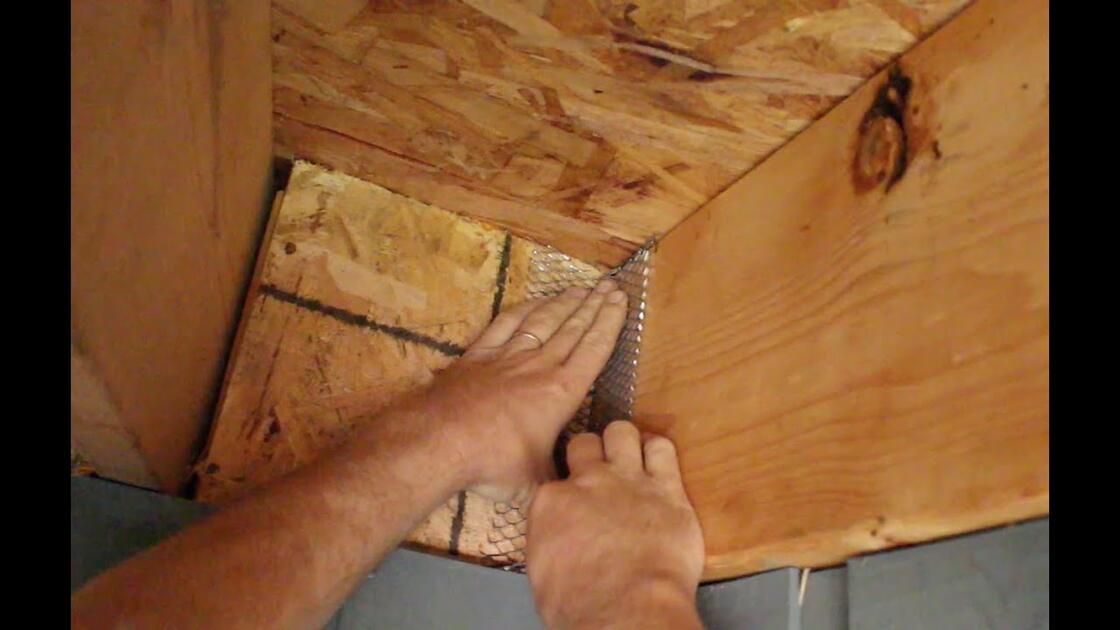
Video: How to keep mice out. Cheaper than hardware cloth, from Ontario Lakeside.
Common Questions in National City
What callers from National City ask before they book.
The noise is under the floor. Is that still rats?
Usually, and usually roof rats, which climb into a crawl space through a torn vent screen as readily as they climb a palm. The County of San Diego's vector control program names the roof rat as the common rat in the county, and its droppings, a quarter to half an inch long and pointed at the ends per the University of Florida extension, along a floor joist confirm it. Near the port the animal at ground level may be a Norway rat instead, which burrows; the inspection tells them apart and the sealing plan changes with the answer.
I rent. Who books the work?
Either of you can call, and the report is written so that a landlord or property manager can act on it. Sealing an apartment building means closing the shared openings, so that part is generally the owner's to arrange, and the contractor we route will inspect the whole building where the owner agrees. A tenant can have the unit inspected regardless and get the findings in writing. The contact form is the route for a written request, and the phone is answered at any hour.
Why traps under the house instead of bait?
Because a poisoned rat dies where it lives, and under a raised floor that means a smell nobody can reach. The EPA describes most rodenticides as anticoagulants that kill four days to two weeks after feeding begins. On top of that, AB 1788 removed the second-generation anticoagulant baits from residential use in California in 2021 and AB 1322 added diphacinone in 2024, per the California Department of Pesticide Regulation, so the legal list is short anyway. Traps in the crawl space and metal on the vents is the program.
How long does it take to clear a house this old?
Two to three weeks in most cases, when trapping and sealing start on the same visit. HomeGuide's 2026 guide gives two to three days of trapping for a few animals and up to a month or two for a severe infestation, and UF/IFAS advises a full week of traps before judging. An old house with both a crawl space and an open attic can take longer because two spaces have to be cleared. Every company we route holds the Structural Pest Control Board Branch 2 registration the work requires; the PR number can be checked at pestboard.ca.gov.
Book the free National City inspection, for a house or a whole building.
Nearby Areas We Serve
The same contractors cover the cities around National City, and the service area is the whole of San Diego County.

Book a Free Inspection in National City
A free inspection on a National City house or apartment building finds the vents, hatches and eaves the rats are using and prices each closure on its own line. The phone is answered 24 hours a day.