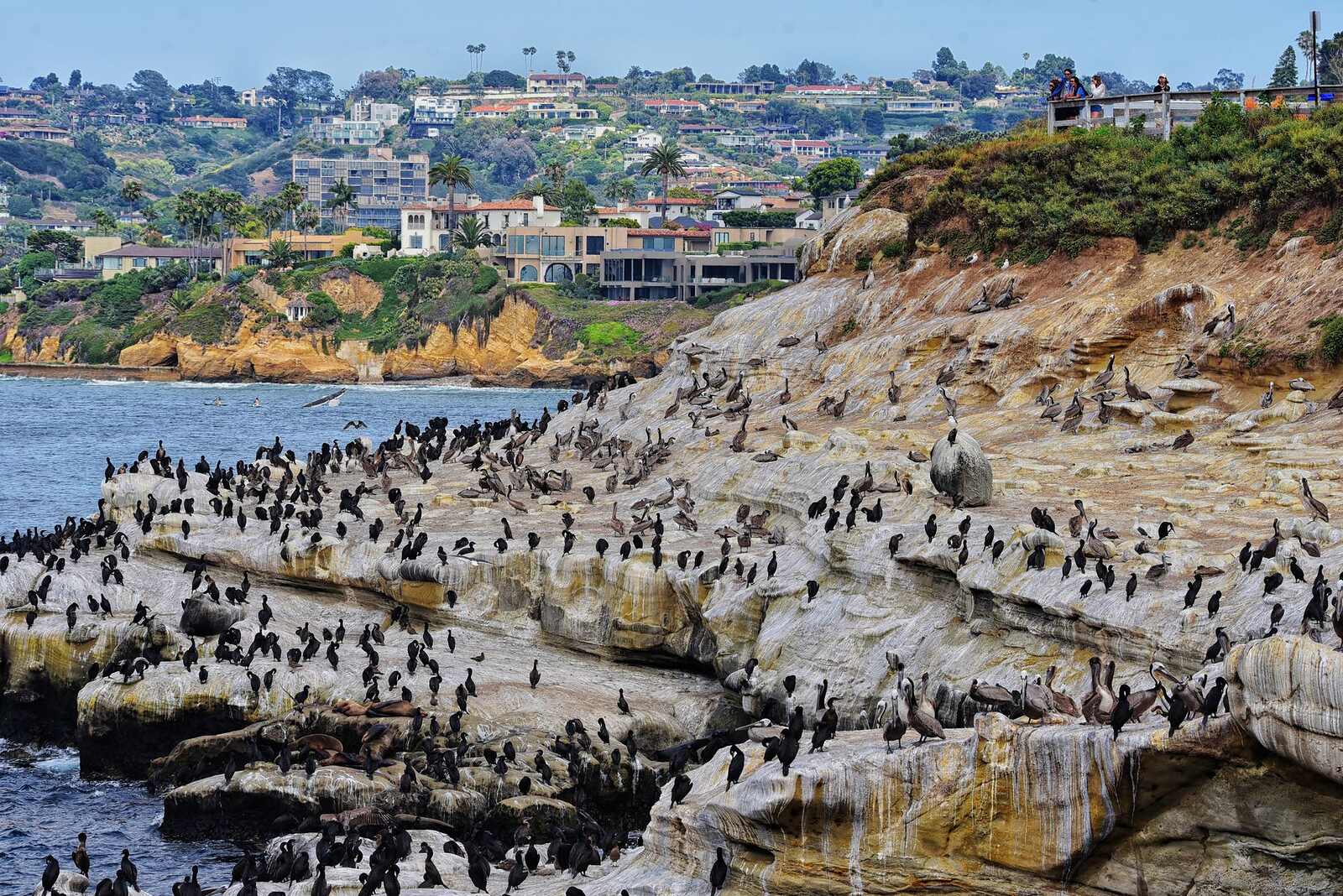
Rodent Removal in La Jolla
La Jolla has cottages that date to the 1890s and the densest mature landscaping in the city, which gives roof rats more cover and more routes to a roof than anywhere else. The inspection is free, and someone answers the phone at every hour.
- Free roofline and landscape inspection
- Trap and seal, no anticoagulant bait
- Branch 2 registered contractors routed
La Jolla cottages and the hedges around them
The oldest houses in La Jolla are beach cottages from the 1890s and the decades after, and what has grown up around them in a century is the problem. La Jolla began as a resort in the 1880s and 1890s, its two oldest surviving cottages date from 1894, and the village and the streets running back from the cove filled with small wood-frame houses and, later, the stucco and tile work of Irving Gill and the architects who followed him. Almost every one of those lots is now enclosed by hedges, and the hedges have had decades to grow thick and tall enough to touch the eaves.
A hedge against a house is a ladder with cover, and a roof rat climbs it unseen to the first gap at the roofline. The cottage rooflines are wood-frame with open or boxed eaves and gable vents screened with old wire; the tile roofs carry the eave gap that a bird stop closes. The coastal air corrodes the metal in both. The contractor we route inspects the roofline from a ladder and the hedges and trees from the ground, since where the plant touches the roof is where the entry usually is. Roof rat removal in La Jolla is a job on the landscape and the building together.
Palms, bougainvillea and year-round pressure on the coast
La Jolla carries the highest roof rat pressure in the city because its planting never stops growing and never dies back. The climate is mild Mediterranean with no frost, so the palms keep their skirts of dead fronds, the bougainvillea and ivy stay on the walls all year, and the citrus and avocado in the older gardens fruit in their seasons. The county names palm skirts, dense vines and fruit trees as the places roof rats nest before they move to a roof, and a La Jolla garden offers all three within a few yards of the eaves. On the Mount Soledad slopes the lots step down the hill, so a neighbor's canopy often overhangs the roof below it.
Roof rats breed all year in a climate like this, with the University of Florida extension giving litters of five to eight and four or five litters in a year, and the indoor calls in La Jolla cluster after the first autumn rains and again after the holidays. Trimming palm skirts, cutting hedges back from the walls and lifting canopies off the roof takes away the routes, and it has to be repeated each season. The metal on the house lasts, which is why rodent exclusion is the part of the work that ends the cycle, and the gardening keeps it ended.
Rodent history in a La Jolla sale
Rodent activity comes up in La Jolla transactions because the houses are old, the gardens are dense and buyers' inspectors look in attics. A seller who books the inspection before listing knows what the attic holds before the buyer's inspector does. A buyer who books it before closing learns whether the roofline has been sealed or only trapped, which is the difference between a solved problem and a paused one. The evidence either inspector looks for is roof rat droppings along the top plates and around the vents, which the University of Florida extension describes as a quarter to half an inch long, banana shaped, with pointed ends.
Where the work has been done, a rodent clearance letter from the contractor records what was found, what was sealed and with what, and what the follow-up showed, and it answers the question in escrow on one page. Where it has not, the itemized quote does the same job in negotiation, with trapping, sealing and any attic cleanup priced on their own lines. HomeGuide's 2026 national band for attic cleanup and decontamination is $600 to $2,500, and higher for severe cases, confirmed at the inspection. Whether you are selling, buying or lying awake in the house you already own, the contact page or the phone, answered 24 hours a day, starts the same inspection.
A representative palm trunk and eave closure in a La Jolla garden
Where a palm stands within reach of a La Jolla roof, the work happens in two places. A representative visit has the palm skirt removed and the trunk checked for nesting, and the eave it reaches closed with quarter-inch galvanized hardware cloth in the rafter bays or a metal bird stop under the first course of tile, depending on the roof. Salt air rusts thin wire quickly on the coast, so the closure is galvanized or aluminum and fastened with stainless screws. The same visit checks the gable vents, the chimney chase and the line where the hedge touches the wall.

What is moving inside the walls
How noise in a wall cavity gets traced.
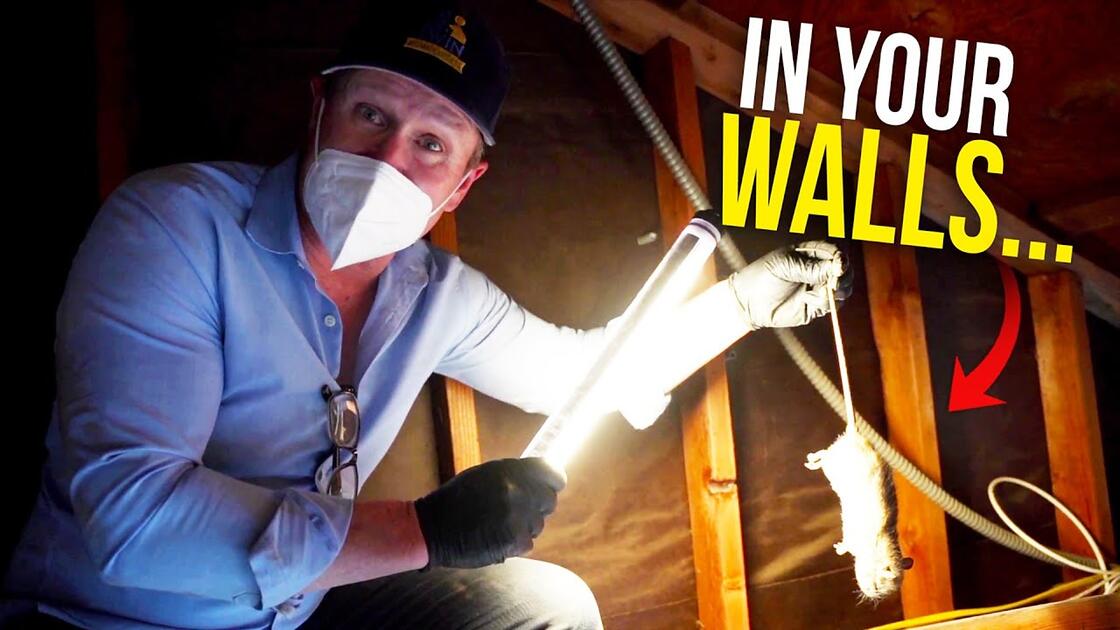
Video: Rodents in your walls? Here's what you do, from Twin Home Experts.
Why La Jolla homeowners book through us
The garden and the roofline on one list
A La Jolla inspection walks the hedges, palms and canopy for the routes and the roofline for the openings, and the contractor we route lists both with a price beside each closure. Every opening is closed to the quarter inch the University of Florida extension gives as the rat-proofing standard, in galvanized or aluminum metal that holds up in salt air. The homeowner gets a written list to give the gardener for the trimming and a written quote for the sealing, and can compare that quote with a second bid line by line.
UF/IFAS: a quarter inch is the rat-proofing standard
Trapping, since the bait list at a home is short
AB 1788 ended residential use of the second-generation anticoagulant baits in California from 2021, and AB 1322 added diphacinone from the start of 2024, with the details on the California Department of Pesticide Regulation's Q&A pages. A licensed contractor at a La Jolla house has a narrow list left, and the practical method is snap traps in the attic for at least a week, then sealing. A poisoned rat that dies inside a cottage wall is a separate problem, and trapping keeps that from happening.
AB 1788 (2021) and AB 1322 (2024), California Department of Pesticide Regulation
Paperwork that holds up in escrow
Every company we route holds the Structural Pest Control Board Branch 2 registration that rodent work in California requires, and the PR number can be checked at pestboard.ca.gov before the first visit. After the work, the contractor can issue a clearance letter recording what was found, sealed and confirmed at follow-up, which is what a buyer's agent asks for. Ask whoever attends what the sealing warranty covers, how long it runs and whether it transfers to a new owner, and ask how many follow-up visits are included.
Structural Pest Control Board Branch 2, PR number at pestboard.ca.gov
A typical La Jolla call
The situation: A 1920s stucco cottage a few blocks back from the cove, listed for sale in the spring. The buyer's inspector reports droppings along the top plate in the attic and asks for a rodent inspection before removing the contingency. The seller has never heard a thing and feels accused. A row of queen palms with heavy skirts stands along the side yard and a ficus hedge on the other side has grown into the eave.
What gets done: The inspection confirms old and fresh droppings along the top plate, finds two rafter bays open where the ficus meets the eave, a gable vent with its screen rusted through in the salt air, and a nest in the nearest palm skirt. Snap traps go into the attic for a week. The rafter bays along that eave are closed with galvanized hardware cloth, the gable vent gets aluminum screen, and the seller has the palms skinned and the ficus cut back a foot from the wall. The insulation under the run is soiled in one bay and is removed and replaced by a licensed contractor as a separate line.
How it turns out: Two roof rats are trapped in the first four nights and none afterward. The follow-up finds the seals intact and no new droppings. The contractor issues a clearance letter listing what was found, what was sealed and the follow-up result, and the buyer's agent accepts it. The sale closes on schedule.
La Jolla rodent questions
These are the questions La Jolla callers ask most often.
Why does La Jolla have so many rats?
Because it has more cover, more food and no winter. The mild coastal climate keeps hedges, ivy and bougainvillea growing all year, palms carry their dead fronds until someone trims them, and older gardens have citrus and avocado. Those are the nesting and feeding places the county names for roof rats, and they sit within a few feet of the eaves. Rats breed year round here. The answer is to trim the routes each season and to close the house with metal once, which is what the free inspection lists.
Does salt air affect the sealing?
It does, which is why the material matters on the coast. Thin wire mesh and untreated steel rust through in a few years within reach of the ocean, and a rusted screen is an opening. The closures used on a La Jolla roofline are galvanized or aluminum, fastened with stainless or coated screws, and a metal bird stop under a tile eave is galvanized steel or aluminum as a matter of course. Ask whoever attends what metal they use and how it is fastened, and ask them to show you a sample.
Can I get a letter for the buyer?
Yes. Once the trapping, sealing and follow-up are done, the contractor can write a rodent clearance letter that records what the inspection found, which openings were sealed and with what, and what the follow-up visit showed. It is the document a buyer's agent or inspector asks for in a La Jolla escrow. If you are the buyer, ask the seller for it, or book the free inspection before your contingency ends and use the itemized quote in the negotiation.
Book the free inspection before the buyer's inspector finds the attic.

Book a free inspection in La Jolla
The phone is answered 24 hours a day. Describe the garden, the roof and what you have heard or found, and the contractor we route will inspect the roofline and the planting together and price every closure on its own line.