Rodent Removal in Encinitas, CA
Encinitas is five old communities under one city, and each one grows something a roof rat likes: eucalyptus, avocado, flower fields, hedges and horse feed. A free inspection by a registered contractor reads the house and the lot together.
- Free roofline, attic and yard inspection
- Trap and seal, no anticoagulant bait
- Branch 2 registered contractors routed
Free Inspection in Encinitas
The free inspection in Encinitas starts outside, because the lot usually explains the attic: a eucalyptus limb over the roof in Leucadia, a hedge grown into the eave in Cardiff, a leftover greenhouse or flower field behind a New Encinitas tract, or a feed shed and tack room on an Olivenhain horse property. Whoever attends then checks the eave line, the vents, the foundation on the older cottages and the attic itself, and writes up trapping, sealing and any cleanup as separate lines with a figure beside each.
Encinitas is about twenty-five miles north of downtown San Diego on Interstate 5, and the North County contractors we route are nearby. The phone is answered 24 hours a day. Book a free inspection and say which of the five communities the house is in.
Leucadia eucalyptus and the Cardiff cottages
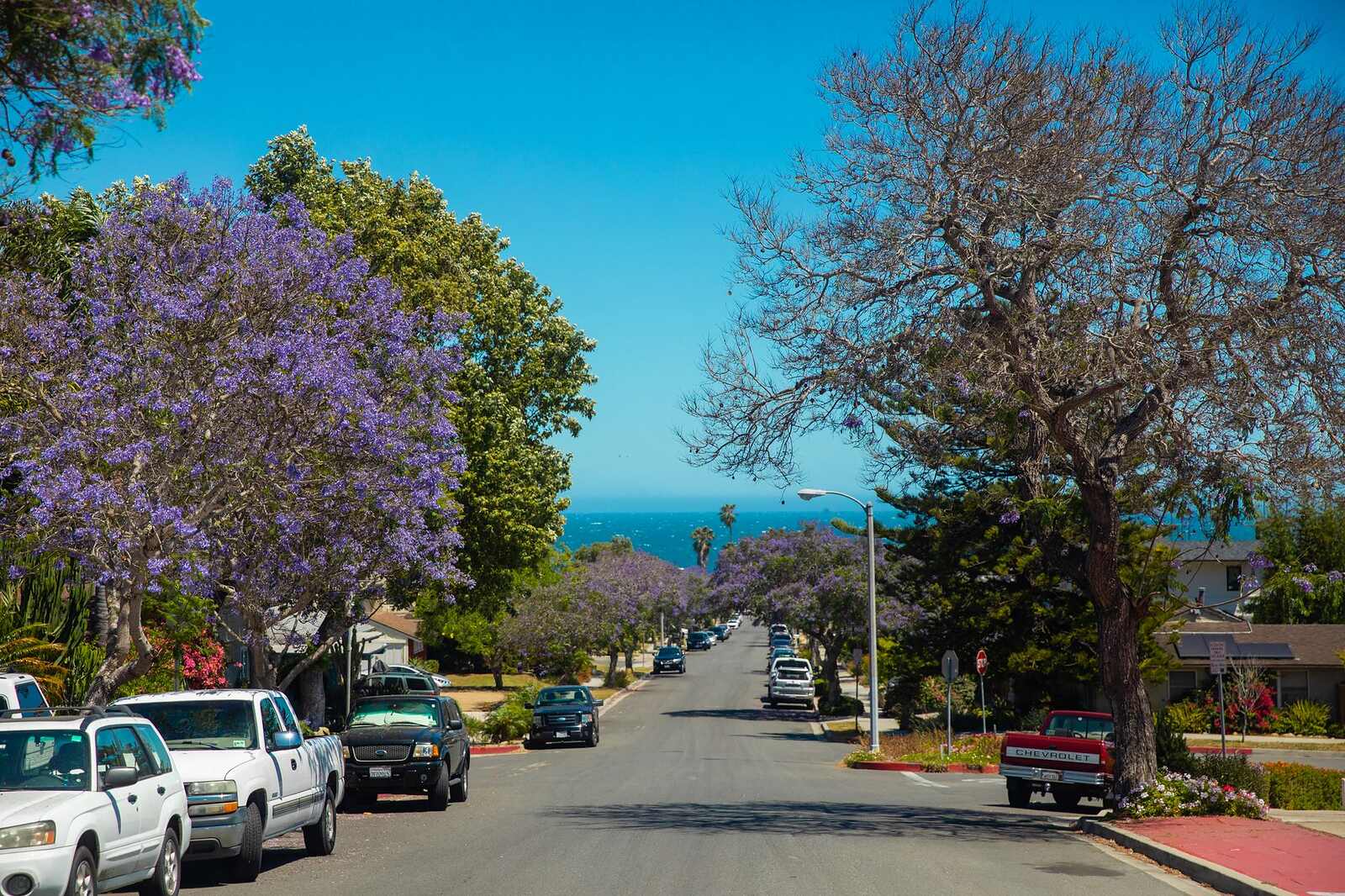
Leucadia is known for the giant eucalyptus that line Coast Highway 101 and the streets behind it, planted generations ago and now towering over cottages, bungalows and the small ranch houses that replaced the avocado groves and greenhouses the area was once full of. A eucalyptus over a roof is a bridge and a shelter both: the University of Florida extension describes roof rats as arboreal, traveling along branches, wires and trunks to a roofline, and shedding bark and leaf litter pile against a fascia. Cardiff-by-the-Sea, laid out in the 1910s and named for the Welsh city, has the same mix of older cottages and later infill on small lots above the San Elijo Lagoon, where the marsh is permanent habitat.
The older houses in both communities are wood frame with open rafter tails, gable vents screened decades ago, and, on the pre-war stock, raised foundations with a crawl space. Salt air within a few blocks of the beach rusts thin screen quickly. Rodent exclusion here is quarter-inch hardware cloth in 18 to 22 gauge, the county's recommendation, at every vent, metal at the open rafter bays, a fitted crawl-space hatch, and galvanized or aluminum stock throughout, checked against the quarter-inch standard UF/IFAS gives for rat-proofing. The eucalyptus limbs come off the roof at the same time.

Old flower land, tile-roof tracts and Olivenhain horse lots
Encinitas was the center of the commercial flower business for decades after the Ecke family brought poinsettia growing here in 1923, and the fields, greenhouses and packing sheds left their mark on the land east of the freeway. New Encinitas was built out in the 1970s, 1980s and 1990s in stucco under concrete tile, often on former growing ground, with open space and the occasional working greenhouse still behind the fence. On tile roofs of that era the eave course is the entry: the gap under the first row of tile has a named metal closure, the bird stop, which the US Department of Energy lists among its recommended measures for tile roofs, and where it is missing or crushed the void runs the length of the eave.
Olivenhain, settled by German immigrants in 1884 and still rural by choice, with two-lane roads, rail fences and horse trails, adds the barn to the list. A tack room, a feed bin and a hay stack are food and shelter a few yards from the house, and a roof rat that lives in the barn ranges about 150 yards per UF/IFAS, which takes in the house. Roof rat removal on an Olivenhain property treats the barn and the house as one job: feed into metal cans, the shed sealed, traps in both buildings, and the house closed in metal.
What We Handle in Encinitas
Encinitas calls are roof rats in cottage and tract-house attics, eucalyptus and hedge routes, barns in Olivenhain, and the attic work that follows a long infestation.
- Roof rat removal: snap trapping on the attic runs, and in the shed or barn where there is one, with traps left a week or more since UF/IFAS notes roof rats avoid new objects.
- Rodent exclusion: hardware cloth at vents and rafter bays, bird stops along tile eaves, fitted hatches, all in corrosion-resistant metal near the coast.
- Rodent inspection: free, covering the eave, attic, crawl space where there is one, the trees over the roof and any outbuilding on the lot.
- Attic cleanup: droppings, nests and urine-soaked insulation removed and the attic sanitized.
- Attic insulation replacement: new fill where the old is flattened or wet, routed to a contractor with the CSLB license the repair requires.
- Dead rodent removal: tracing a smell to the carcass in a wall or ceiling, usually after someone else baited.
- Rodent clearance letters: a written report for an escrow or a lease on a coastal house where the buyer's inspector will open the attic.
A Typical Encinitas Job
The situation: A couple in a 1960s Leucadia ranch house under two big eucalyptus hear something drop onto the roof after dark and then run the length of the living room ceiling. Bark and leaf litter are piled against the fascia on the tree side. They have a dog who now paces under the sound, and neither of them has slept through a night in two weeks. A neighbor said the trees have always had rats and there is nothing to be done.
What gets done: The inspection finds the rafter bays open along the tree side, a gable vent with its screen rusted through, and a run of droppings along the top plate above the living room. The contractor we route sets snap traps in the attic on the run, blocks the rafter bays with galvanized hardware cloth on stainless screws, refits the gable vent, and leaves one bay open until the traps go quiet. The couple has an arborist lift the eucalyptus canopy off the roof and rake the litter away from the wall.
How it turns out: Three rats are trapped in the first six nights and none in the following week. The last bay is closed at the follow-up, the report lists every closure with a photograph, and the dog sleeps through the night, as do they.
What This Costs in Encinitas
An Encinitas rodent job usually sits inside the national bands below, and the free inspection says which lines a particular house and lot need.
| Work | National band (HomeGuide 2026) |
|---|---|
| Inspection | Free here; $0 to $175 standalone elsewhere |
| Trapping and removal | $250 to $1,200 |
| Full-home exclusion | $500 to $2,500 |
| Attic cleanup and decontamination | $600 to $2,500, around $4,000 for a severe attic |
| Insulation removal and replacement | $2.50 to $5.50 per square foot |
| Dead rodent removal | $150 to $500 |
| Full-scope restoration | $3,000 to $10,000 and up |
The figures are HomeGuide's 2026 national bands, labeled national since no Encinitas cost survey exists to quote; the inspection narrows them to one number for one property. A Leucadia or Cardiff cottage on a raised foundation carries the crawl-space sealing line the national guides price, and the coastal metal costs more than plain steel. A New Encinitas tile roof is priced by the length of eave that needs a bird stop. An Olivenhain property with a barn adds a second building to trap and seal, which is the one thing that can push a job past the top of the exclusion band. Have whoever attends split the lines and spell out the sealing warranty.
Rat holes around a building
What a burrow looks like, and where it leads.
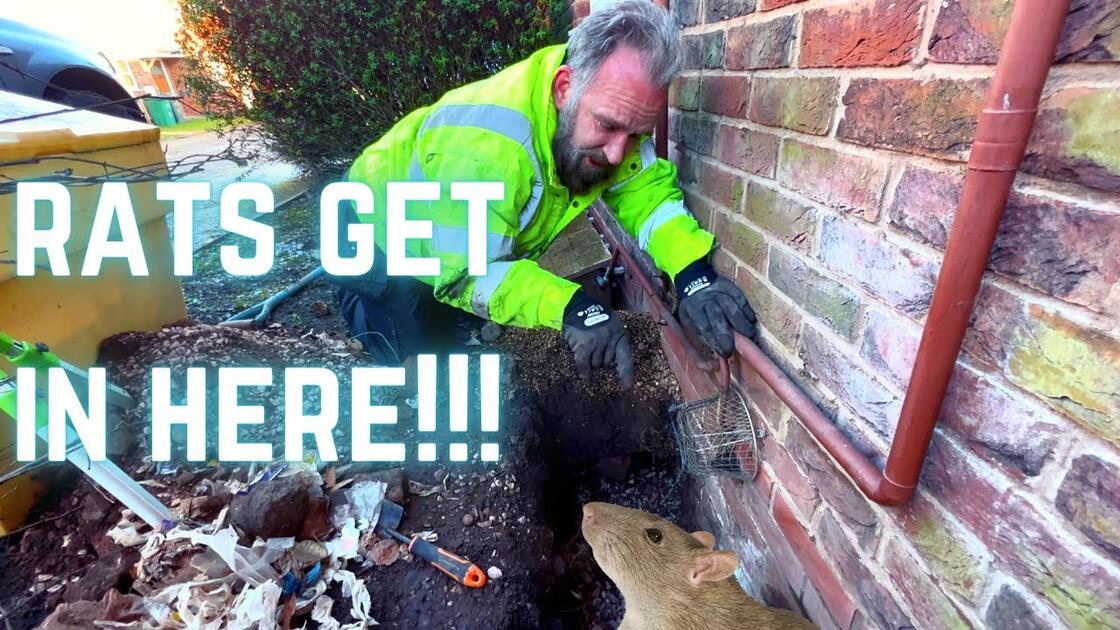
Video: RAT holes around your house? How to stop rats burrowing, from Pest Interceptors.
Common Questions in Encinitas
What callers from Encinitas ask before they book.
Do the eucalyptus trees have to come down?
No. The limbs over the roof need lifting so nothing touches or overhangs the eave, and the bark and leaf litter needs raking away from the walls, but the tree itself is fine where it stands. What ends the problem is the house: closed rafter bays, screened vents and a fitted hatch hold whether or not a rat can reach the roof. The University of Florida extension describes roof rats as arboreal, so the tree is a route; the metal on the house is what closes the door at the end of it.
We have horses in Olivenhain. Does that change the job?
It adds the barn. Feed, hay and a dry tack room are what a roof rat lives on, and an animal living in the barn ranges about 150 yards per UF/IFAS, which reaches the house. The contractor we route treats the property as one job: feed into sealed metal cans, the shed and tack room closed in hardware cloth, traps in the barn and the attic, and the house sealed to the quarter-inch standard. The report prices the barn and the house separately so you can see each.
How long does it take to get rid of rats in Encinitas?
Two to three weeks is typical once trapping and sealing start together. HomeGuide's 2026 guide gives two to three days of trapping for a few animals and a month or two for a severe infestation, and UF/IFAS advises a week of traps before judging because the species is wary of new objects. A lagoon, a eucalyptus line or a barn within range keeps the pressure on, so the sealing is what gives the trapping an end date.
Is poison an option, and who is licensed?
Poison is mostly off the table at a California home. AB 1788 removed the second-generation anticoagulant baits from residential use in 2021 and AB 1322 added diphacinone in 2024, per the California Department of Pesticide Regulation, and the EPA notes anticoagulants kill days to weeks after feeding, which means a carcass in the wall. The contractors we route trap and seal. Every company we route holds the Structural Pest Control Board Branch 2 registration the work requires, with the PR number checkable at pestboard.ca.gov; insulation replacement goes to a contractor with the CSLB license for it.
Book the free Encinitas inspection and get the house and the lot read together.
Nearby Areas We Serve
The same contractors cover the cities around Encinitas, and the service area is the whole of San Diego County.

Book a Free Inspection in Encinitas
A free inspection on an Encinitas house, from Leucadia to Olivenhain, shows where the rats come in and what each closure costs. The phone is answered 24 hours a day.